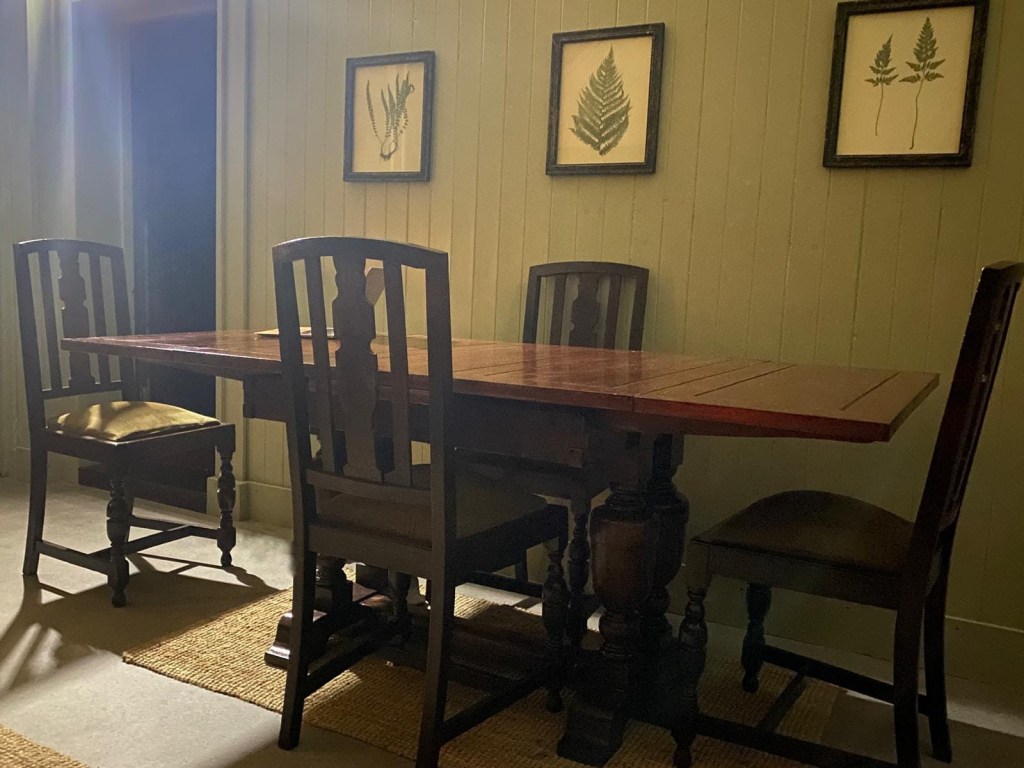
I remember certain tables long after the meals served upon them have been forgotten. Almost thirty-five years have passed since I found myself sitting at one in Darjeeling, in the foothills of the Himalayas. I had travelled there for a few days’ respite from the heat and humidity of the monsoon in Calcutta, where I was working at the time.
As I wandered through the town, I found myself lingering outside a small shoe shop. I was drawn less by the shoes than by the shop itself. The old wooden shelves had acquired the kind of weathering that only time can produce. Before I knew it, I had wandered inside.
The owner looked up, smiled and we began talking. When he discovered that I was Irish, his face lit up. As a boy he had been educated by Irish nuns. Before long he insisted that I join him and his wife for lunch.
We descended a narrow staircase behind the shop into the rooms where they lived. His wife greeted me warmly, though she spoke no English. They exchanged a few words in what I took to be Mandarin before she turned to the stove and began preparing lunch.
I remember the glass jars filled with unfamiliar Chinese ingredients. I remember the aroma drifting across the room. I remember her smile. And I remember, perched on top of the television, a statue of Saint Teresa of Ávila. For reasons I have never fully understood, those details have remained with me ever since.
The meal itself was delicious, but that is not why I remember it. I remember it because for an hour or so, I simply felt at home.
A few years later I encountered the work of Emmanuel Levinas. His philosophy asks to be read slowly. It is famously demanding, but worth the effort. He argued that our ethical life begins not with abstract principles but with the encounter with another person. The face of the other makes a claim upon us before any language is formulated. Reading Levinas helps me understand that afternoon in Darjeeling. It was not simply an act of kindness. It was the experience of being received.
Hospitality, I have come to think, thrives on difference. I remained Irish. They remained Chinese. We shared very little language. Yet none of those differences prevented a sense of belonging from quietly emerging around the table. If anything, they made the experience more pronounced. The hospitality of the Chinese couple did not ask us to become the same. It simply made room for us to be together. That memory gives me joy.
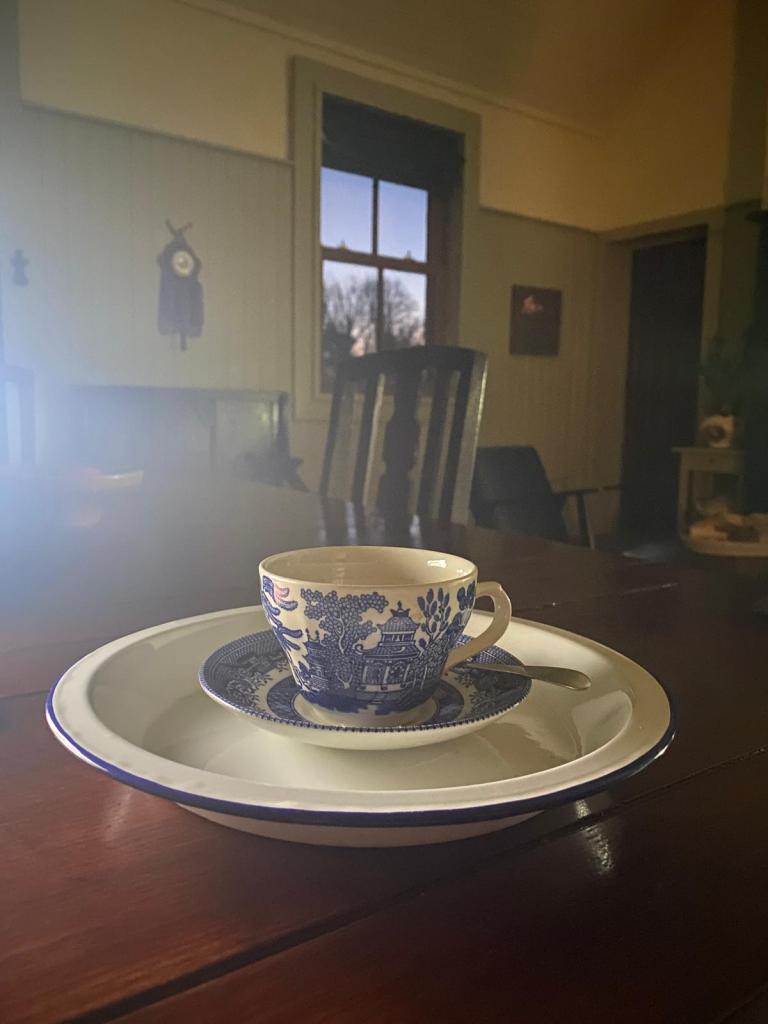
These days my own table occupies a quiet but important place in my life. It is where I eat and, when I have guests, where conversations have a habit of lingering long after the meal or cup of tea has ended.
Living alone in rural Ireland has taught me something I never expected. The way I inhabit my solitude becomes the way I receive other people. I have found that solitude can narrow me, but it can also enlarge me. If it becomes merely self-enclosed, my welcome narrows with it. But if it teaches me attention, gratitude and care, then those same qualities quietly accompany me when another person crosses the threshold.
I care about that table more than I once imagined I would. I iron my linen napkins with pleasure. I use the good china. Fresh flowers appear whenever they can. None of these things is intended to impress. They are simply ways in which care becomes visible. They say, before a word has been spoken, that another person’s presence matters.
Some people arrive by invitation. Others entirely by surprise. The table makes no distinction. Perhaps that is why it has become such an important part of my life. It reminds me that hospitality is less about entertaining guests than about cultivating a way of living in which another person can be received without fuss and without calculation.
Sometimes I wonder whether hospitality is remembered less for what it offers than for what it quietly makes possible. For an hour in a small room below a shoe shop in Darjeeling, I was not passing through someone else’s life. I was given a place at the table and I felt I belonged.


Leave a Reply