There are certain houses I remember long after I have forgotten the conversations that took place within them. I left them with the curious feeling that life somehow became more spacious while I was there. It is difficult to explain why..
Atmosphere is an elusive thing. It cannot be designed in quite the way a room can be designed, nor bought in the way furniture can be bought. It seems instead to gather slowly over time. Houses absorb something of the lives lived within them. Shared work leaves traces. Conversation leaves traces. So too do silence, generosity and how we pay attention. After many years, a house may come to possess a character that is somehow more than the sum of its walls. Perhaps this is also why some houses seem immediately welcoming.
One such house stands on the outskirts of Sheffield. It was the home of Edward Carpenter. Towards the end of the nineteenth century, Edward Carpenter walked away from what most people would have regarded as a successful life. Educated at Cambridge and ordained in the Church of England, he settled instead at Millthorpe, a smallholding outside Sheffield, where he cultivated vegetables, wrote books, promoted the wearing of sandals and lived quietly with his lifelong companion, George Merrill. It was an unconventional life, but over the years an extraordinary procession of visitors found their way there. Writers, artists, trade unionists, reformers and curious travellers came, drawn not only by Carpenter’s reputation but by the possibility that another way of living might be found there.
What many of those visitors remembered most vividly was the life of the house itself. They recalled working in the garden, sharing simple meals, walking across the Derbyshire countryside and conversations that unfolded without urgency. The life of the mind seemed entirely at home among vegetable beds, fruit trees and muddy boots.
The more I read about Millthorpe, the more I found myself wondering what those visitors had really carried away with them. It was more than the memory of an interesting man. They had encountered a life in which things that are so often divided belonged naturally together. Work and thought. Friendship and solitude. Craft and philosophy. The atmosphere of the house arose from the coherence of the life lived within it. What they experienced was not simply Carpenter’s generosity, but the welcome offered by a life whose various parts belonged together.
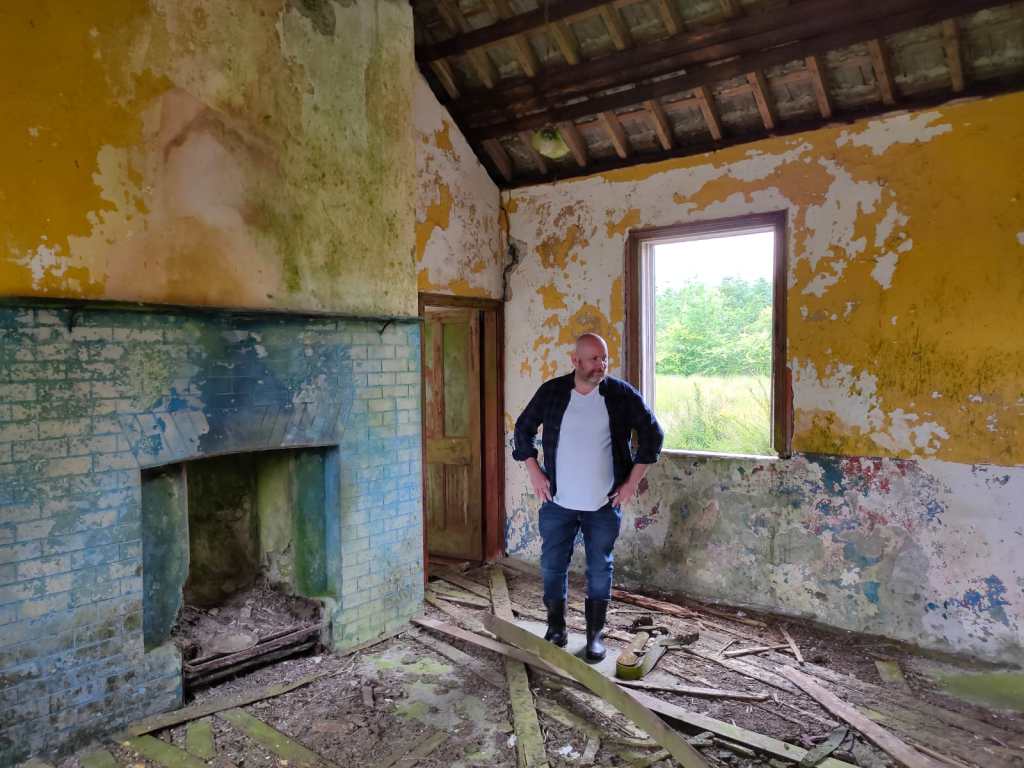
While restoring my little house in rural Ireland, I found myself thinking about this rather more than I expected. The work began, as renovation always does, with practical matters. The roof leaked. The floors were rotten. The windows admitted more rain than light. Yet somewhere along the way I started asking what sort of life this house should make possible.
It is a question that has proved more difficult to answer than I expected. It has also led me to wonder what hospitality might mean in such a place. I have come to believe a house acquires its atmosphere long before anyone crosses its threshold. Yet it is often only when another person enters that we become aware of it ourselves. Their presence reveals something that has been quietly taking shape over time.
We tend to imagine that hospitality begins when the door is opened. By then, however, the important work has already been done. The welcome has been prepared by habits and countless ordinary choices made long before anyone arrived. It has been shaped by the rhythm of the household, by the place work occupies within it, by the quality of its conversations, by the habits of attention it has patiently cultivated. A guest does not create that atmosphere. They discover it.
I know only that I have become less interested in creating a beautiful house and more interested in cultivating the conditions from which such an atmosphere might slowly emerge. A house may be beautifully restored and still feel curiously empty. Another may remain imperfect yet possess a warmth that no architect could ever draw on a plan. The difference has little to do with taste. It has everything to do with the quality of life that gradually takes root there.
Visitors to Carpenter’s home at Millthorpe did not simply encounter an unusual man. They encountered a way of living whose various parts had learned to belong together. Conversation, work, simplicity and thought formed a single pattern. The atmosphere of the house was simply what that life looked like when another person stepped inside it.
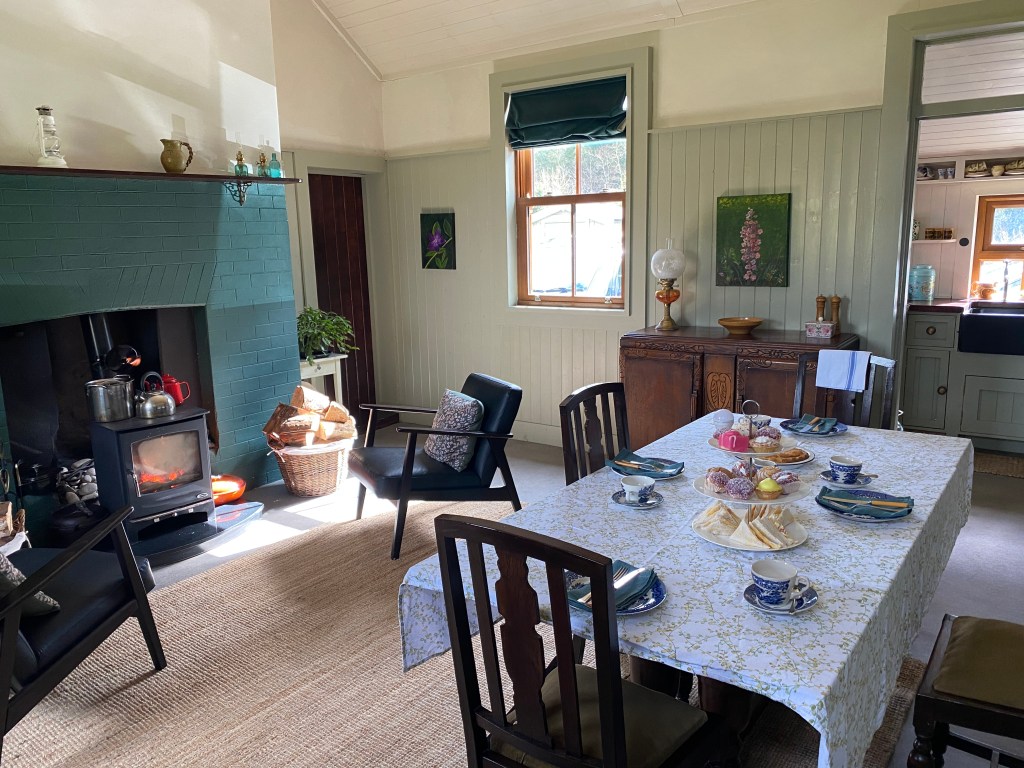
Certain houses remain with us because, if only for an afternoon, they allow us to glimpse another way of living. Long after the conversations have faded, the atmosphere remains. Perhaps that is why genuine hospitality lingers in the memory long after the welcome itself has ended.


Leave a Reply